Funding for Sustainable Mobility in Major Urban Areas
23 July 2026
Autostrade del Brennero: a public limited company operating under a service concession arrangement at Traffic 2026
28 July 2026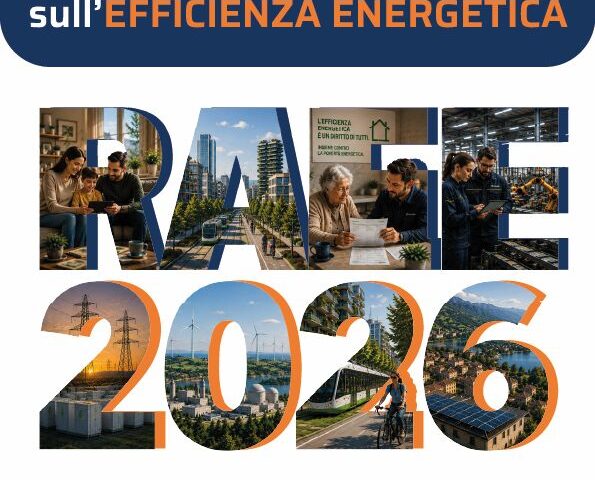
Italy is moving closer to the energy efficiency targets set out in its National Integrated Energy and Climate Plan (NECP). Between 2021 and 2025, the country achieved total energy savings of 5.08 million tonnes of oil equivalent (Mtoe), reaching 85% of the interim target of 6 Mtoe. This amount of energy is equivalent to more than the annual electricity consumption of two of Italy’s most industrialized regions, Emilia-Romagna and Veneto.
The figures come from ENEA’s 15th Annual Energy Efficiency Report, which highlights that, alongside tax incentives, sustainable mobility continues to play a crucial role in reducing the country’s overall energy consumption.
Sustainable mobility delivers more than 2.3 Mtoe in five years
Between 2021 and 2025, sustainable mobility measures generated 2.309 Mtoe of cumulative energy savings. Although the contribution declined slightly in 2025 to 0.404 Mtoe, down 6% from the previous year, it remains one of the most significant contributors to national energy efficiency.
According to ENEA, the annual savings evolved as follows:
- 2021: 0.573 Mtoe
- 2022: 0.501 Mtoe
- 2023: 0.401 Mtoe
- 2024: 0.430 Mtoe
- 2025: 0.404 Mtoe
In 2021, sustainable mobility accounted for more than 40% of the country’s annual energy savings. By 2025, its share had fallen to around 8%, largely because overall national energy savings increased thanks to other efficiency measures.
Public transport renewal, modal shift incentives and rail freight drive results
The report identifies three main policies behind these energy savings:
- Renewal of the public transport bus fleet.
- The Sea Modal Shift (Marebonus) programme, which encourages freight transport by sea instead of road.
- The Ferrobonus scheme, supporting intermodal rail freight transport.
Together, these initiatives help reduce fossil fuel consumption while improving the efficiency of Italy’s transport system.
Electric buses now account for 41% of new registrations
One of the report’s most encouraging findings concerns the electrification of public transport.
According to ENEA, replacing older buses generated annual savings of approximately 0.026 Mtoe of final energy and 0.019 Mtoe of primary energy.
Even more significant is the rapid growth of zero-emission vehicles: fully electric buses represented 41% of all new bus registrations, confirming the accelerating transition towards cleaner public transport fleets.
ENEA also points out an important technical consideration. Although electric buses consume much less energy during operation than diesel vehicles, the electricity they use is still partly generated from a power mix that has not yet been fully decarbonized. As a result, savings in primary energy are lower than those measured in final energy consumption.
The report concludes that electrifying public transport already delivers major environmental benefits—particularly through the reduction of local air pollution—but its full potential will only be realized as electricity generation becomes increasingly based on renewable energy sources.
Electric cars help offset a slower vehicle renewal cycle
The report also examines the passenger car market.
According to ENEA, the growing share of electric vehicles—whose drivetrains are significantly more efficient than conventional internal combustion engines—has partially compensated for the slowdown in vehicle registrations compared with the 2016–2019 period.
Despite a weaker automotive market, the increasing penetration of electric vehicles continues to improve the overall energy efficiency of Italy’s road transport sector.
Tax incentives remain the strongest driver of energy savings
Fiscal incentives continue to be the single most effective policy instrument.
Between 2021 and 2025, tax deductions generated 2.67 Mtoe of energy savings, accounting for approximately 52% of Italy’s total savings.
However, the report notes a 37% decline in 2025 compared with the previous year, reflecting the gradual scaling back of building renovation incentives.
Energy savings delivered through the White Certificates scheme also declined slightly, while the Thermal Account (Conto Termico) continued to grow, delivering 0.131 Mtoe of savings in 2025.
Superbonus impact fades as incentive schemes slow
As expected, ENEA reports that the extraordinary contribution of Italy’s Superbonus programme is gradually diminishing.
In 2025, the measure generated 0.113 Mtoe of energy savings, while both the standard Ecobonus and Home Renovation Bonus also recorded lower annual contributions.
Despite this slowdown, both schemes continue to play an important role over the medium term. Between 2021 and 2025 they generated cumulative savings of:
- 0.791 Mtoe through the Ecobonus;
- 0.375 Mtoe through the Home Renovation Bonus.
ENEA: Energy efficiency and sustainable mobility remain strategic priorities
Presenting the report, ENEA President Francesca Mariotti stressed that energy efficiency delivers far more than lower energy consumption, generating economic, environmental and social benefits for businesses, public administrations and households alike.
ENEA’s Director of the Energy Efficiency Department, Ilaria Bertini, also emphasized the importance of combining technological innovation with cultural change to accelerate the energy transition across all sectors.
The next challenge is maintaining momentum
The latest ENEA report shows that Italy is approaching its interim NECP targets, but also underlines the need to maintain strong policy support.
Sustainable mobility remains one of the pillars of the country’s energy efficiency strategy. Renewing public transport fleets, expanding electric mobility and encouraging freight transport by rail and sea all contribute significantly to reducing energy consumption and emissions. To maximize these benefits, however, transport electrification must go hand in hand with a faster decarbonization of electricity generation through renewable energy.