
MaaS for Italy: the future of mobility takes shape
29 July 2026
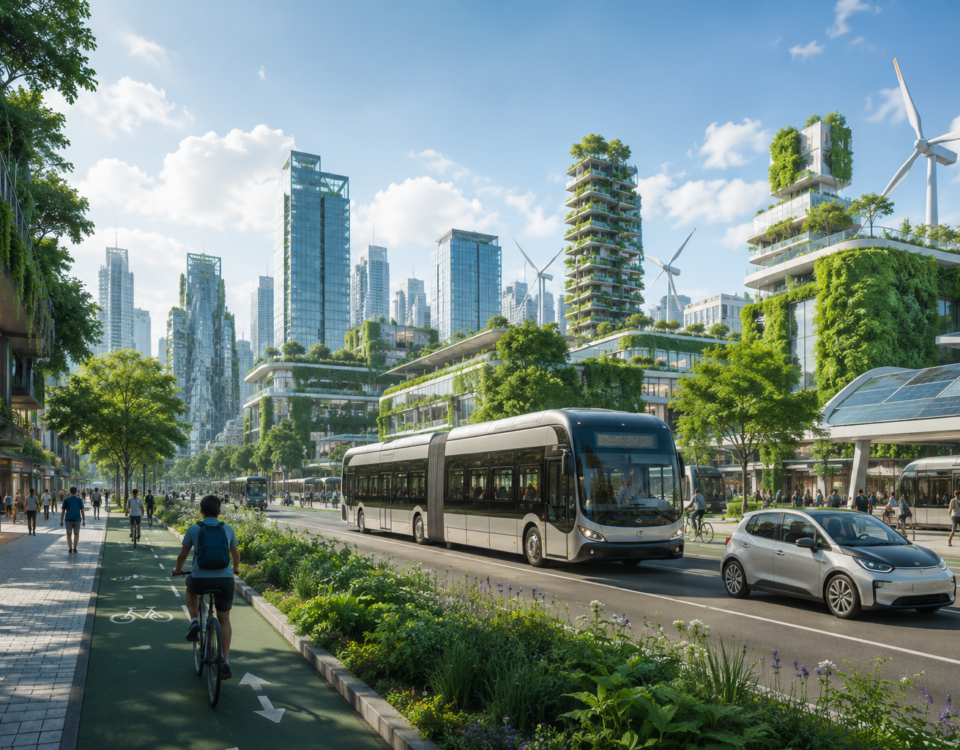
Mobility is entering a new phase, characterised by interaction between vehicles, infrastructure, users and digital platforms. Connected cars, public transport systems, sensors and applications exchange information in real time, creating an ecosystem in which the digital component is becoming an integral part of how we travel.
This evolution concerns urban centres, metropolitan networks, railway stations, roads and motorways, and requires reliable, continuous connectivity, including in complex environments such as tunnels and underground infrastructure. A widespread network makes it possible to integrate traffic management, safety, infrastructure monitoring and digital services, helping to make travel more efficient, safer and more sustainable.
The figures capture a transformation that is already under way. According to the Connected Car & Mobility Observatory of Politecnico di Milano, 16.9 million connected cars are currently on Italian roads, accounting for almost 50% of the vehicles in circulation. More than half of Italian municipalities have launched smart mobility initiatives, while 40% of Italians say they have reduced their use of cars by choosing more sustainable alternatives, including car sharing and micromobility. In addition, 15% say they would be willing to use a self-driving car in the coming years.
Against this backdrop, the mobile network is becoming a true enabling infrastructure for the transport system. This is the direction pursued by INWIT, with a shared, multi-operator infrastructure model supporting connected mobility in Italy.
A digital network for building smart mobility
Smart mobility stems from the combination of connectivity, data, digital platforms and new models for managing urban and extra-urban mobility. Devices can communicate with vehicles and infrastructure, while data processing makes it possible to interpret traffic flows and respond more quickly. Digital platforms also make it possible to integrate different modes of transport, creating more efficient and sustainable services.
To support this ecosystem, INWIT has approximately 26,000 towers and 850 DAS systems, a distributed network capable of hosting and connecting users, vehicles, sensors, cameras and smart gateways.
The infrastructure can therefore support applications for flow analysis, access control and AI-powered video surveillance, as well as smart traffic lights, licence plate recognition, parking monitoring and digital payments.
DAS systems play a specific role by making it possible to extend the signal to places where traditional coverage faces greater challenges, such as tunnels, stations, car parks and large, heavily frequented venues. Their multi-operator nature also allows several mobile operators to use the same infrastructure, reducing the need to build parallel networks.
Metro systems and stations: 5G reaches mobility hubs
Tunnels and stations are among the environments where connectivity quality is particularly important. 4G and 5G networks allow passengers to stay connected while also supporting new safety and operational management services, from intelligent video surveillance to crowd monitoring and IoT-based monitoring.
In Milan, INWIT has completed multi-operator coverage of Metro Line M4, comprising 21 stations and 15 kilometres of tunnels. The project includes more than 1,100 mini-antennas, 400 remote units and 25 kilometres of optical fibre. The Blue Line has thus become the first metro line in Italy, and one of the first in Europe, to offer full 5G coverage.
In Rome, Roma 5G, developed by Smart City Roma, an INWIT Group company, covers 75 stations on Lines A, B, B1 and C, as well as 68 kilometres of tunnels. The infrastructure includes more than 3,000 mini-antennas, over 1,000 remote units, more than 250 kilometres of fibre and approximately 150 probes for environmental monitoring.
The shared connectivity model also extends to rail transport. At Roma Termini, the first major Italian railway station with multi-operator 5G coverage, the project covers 115,000 square metres and includes 125 mini-antennas and eight kilometres of fibre.
Infrastructure under control: IoT and Digital Twins for maintenance
The digitalisation of mobility also extends to bridges, viaducts and tunnels, which can become connected assets that can be monitored in real time. Towers and digital sites can host sensors capable of collecting information on inclination, movement, deformation, acceleration, temperature, road-surface conditions and wind. Cross-referencing this data makes it possible to analyse infrastructure behaviour in relation to traffic and environmental conditions.
The information collected can feed a Digital Twin, a digital representation of the infrastructure that is updated on the basis of data gathered in the field. This approach supports predictive maintenance, making it possible to identify anomalies and plan interventions more promptly.
IoT can also support air-quality monitoring, the detection of seismic events and fires, and the identification of phenomena such as floods and waterlogging. For INWIT, integrating digital infrastructure and IoT can make operational processes more efficient, optimise resources and reduce maintenance costs, while at the same time creating the foundations for new services.
5G-BEAM: connectivity runs along the Brenner Corridor
The same approach can be extended to major road corridors. INWIT has already enabled more than 1,000 kilometres of road and motorway tunnels, using approximately 700 radio-electrical systems, as well as more than twenty car parks through DAS systems.
Among the projects dedicated to the next generation of mobility is 5G-BEAM, co-funded by the European Union through the Connecting Europe Facility and managed by the HaDEA Agency.
The initiative aims to establish continuous, high-performance 5G connectivity along more than 400 kilometres of the Brenner Corridor, connecting the Modena area with the German border via Brenner and Kufstein.
In Italy, a 5G Standalone network with edge computing capabilities is planned, while in Austria a passive infrastructure ready for 5G Standalone will be deployed. The objective is to create the technological foundation for future Connected and Automated Mobility services along a strategic route for both people and goods.
INWIT is participating in the initiative as an industrial partner. In Italy, the project includes the upgrade to 5G of the equipment installed on existing towers and the construction of four new towers.
Particular attention is being paid to tunnels: nine motorway tunnels in Trentino-Alto Adige will be equipped with DAS systems and repeaters, ensuring service continuity even where the external signal is insufficient.
The project demonstrates how, in connected mobility, coverage cannot be assessed solely in geographical terms: continuity and performance must be guaranteed along the entire route, with interventions focused on the most critical points. Advanced 5G coverage is also planned in high-traffic areas, starting with toll booths and service areas.
From coverage to intelligent mobility
The digital transformation of transport requires a network designed not only to connect people and devices, but also to support the movement of vehicles and passengers.
From metro systems to railway stations, from bridges to tunnels and motorways, digital infrastructure is becoming the connection point between data, services and mobility. The journey towards Connected and Automated Mobility depends on a continuous, shared, multi-operator network capable of supporting increasingly advanced applications and bringing connectivity to where mobility needs it most.
From this perspective, 5G and IoT are not simply technologies for improving communications, but tools for rethinking infrastructure management, enhancing safety and building a more efficient transport system ready to meet the needs of the mobility of the future.
Innovative mobility solutions will be presented at Traffic 2026, the international exhibition and conference dedicated to traffic management, infrastructure, safety and enforcement, smart roads and smart cities, intelligent mobility, parking solutions, and public and collective transport.
It will take place as part of Urban Tech 2026 – The Urban Technology Show, the new event dedicated to e-mobility, traffic, commuting, security, telecoms & data and environment, scheduled to take place from 7 to 9 October 2026 at Bologna Exhibition Center.